Portrait mode required for the proper experience.
Performance starts with proper alignment
PORTMILL Motorsport logo with PORTMILL in bold white uppercase letters and Motorsport in red cursive script on a black background.
Blue arrow pointing upward on a green rectangular background.

Engine Timing Systems
Technical Overview

What the Timing System Actually Does

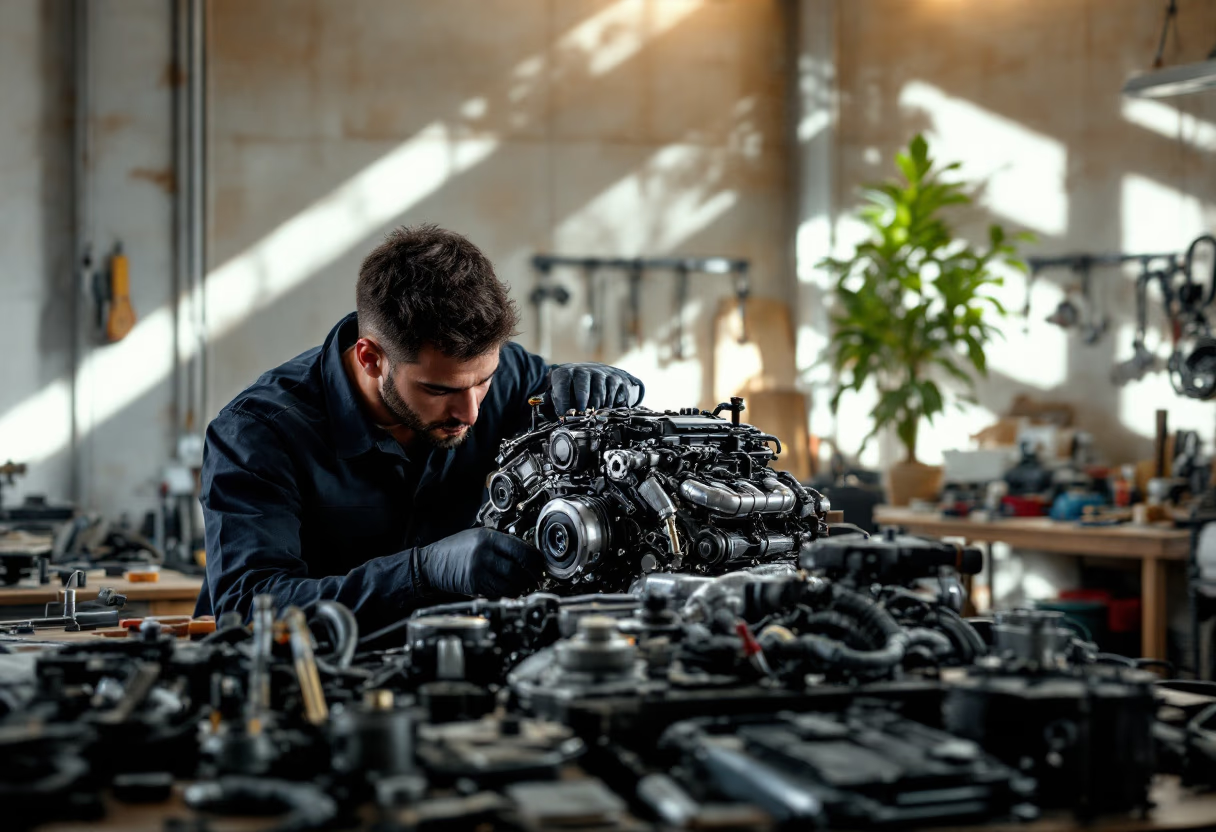
The timing system synchronises the rotational movement of the crankshaft and camshaft so that valves and pistons operate in perfect harmony.

This precision allows the engine to:

- Maintain proper combustion
- Deliver smooth and consistent power
- Reduce emissions
- Operate quietly and efficiently
- Avoid internal mechanical interference

Even small timing deviations can have a noticeable impact on engine health and drivability.

Book a Timing Assessment
Not sure whether your vehicle is due for timing service? Our team can inspect your engine, review its service history, and give you a clear, professional recommendation based on manufacturer guidelines.

Your engine’s timing system is too important to leave to chance.
Let our specialists handle it.
Types Of Timing Systems - Key Differences
1. Timing Belt

A high-strength reinforced belt with precision-cut teeth that engage with the cam and crank pulleys.

Technical characteristics:
- Constructed from rubber, fiberglass or Kevlar reinforcements.
- Operates quietly with low friction.
- Sensitive to contamination (oil/ coolant).
- Requires scheduled replacement due to material ageing.
- Common replacement intervals: 60,000 to 120,000 miles (depending on manufacturer).

Failure mode:
Tooth shearing, cracking, delamination, or complete belt snap — typically causes immediate loss of timing.
2. Hybrid / Belt-in-Oil Systems

Some manufacturers use specialised timing belts running inside the engine oil.

Technical characteristics:
- Low noise and reduced friction
- Requires specific oil quality
- Sensitive to contamination and service neglect.

Common Applications:
Used by certain Ford and Vauxhall/Opel engines.

Failure mode:
Hybrid or belt-in-oil timing systems operate inside the engine oil environment and rely heavily on correct lubrication and oil quality.

While designed for efficiency and reduced noise, these systems are particularly sensitive to service neglect and contamination. For example:

1. Belt material degradation
Prolonged exposure to degraded or incorrect engine oil can cause the belt material to soften, swell, or delaminate, compromising structural integrity.
2. Oil contamination and debris circulationAs the belt deteriorates, rubber particles can circulate within the oil system, potentially blocking oil pickup strainers and restricting lubrication to critical engine components.
3. Premature belt wear or tooth failure
Incorrect oil specification or extended service intervals accelerate wear, increasing the risk of belt tooth deformation or separation.
4. Loss of timing accuracy
Material degradation and belt stretch can cause timing drift, leading to poor engine performance, misfires, or camshaft correlation faults.
5. Warning lights and fault codes (EML / Check Engine Light)
Timing irregularities often trigger diagnostic fault codes related to camshaft and crankshaft position correlation.
6. Secondary engine damage
In severe cases, belt failure can result in loss of valve timing and internal engine damage, particularly in interference engine designs.

3. Timing Chain

A metal chain running inside the engine, lubricated by engine oil.

Technical characteristics:

- Designed for long service life.
- Utilises tensioners, guides, and sprockets.
- Dependent on oil quality and oil pressure.
- Can stretch over time, affecting ignition and valve timing.
- More resistant to heat and contamination than belts.

Failure mode:

Chain stretch, worn guides, or tensioner collapse causing “jumped timing,” rattling noises, or timing errors detectable by diagnostic equipment.
4. Gear - Driven Timing

Interlocking metal gears synchronize crank and cam rotation.
Less common, heavy-duty or performance engines

Technical characteristics:

-
Extremely durable and precise.
- Minimal maintenance required.
- Heavier and noisier than belts/chains.
- Used in high-performance and older diesel engines.

Failure mode:

Rare, but gear wear or bearing failure can disrupt timing.
Why Timing Integrity Is Critical
The timing system synchronises the crankshaft and camshaft to ensure valves and pistons move in perfect coordination. Even minor deviations in timing can lead to poor performance, increased fuel consumption, and accelerated engine wear. Severe timing failures — especially on interference engines — can result in bent valves, damaged pistons, and catastrophic internal engine damage.

Maintaining timing accuracy through routine inspections, high-quality components, and timely replacement is essential for long-term engine reliability and safe operation.

A correctly timed engine could also:
1. Prevents Mechanical Interference
In interference engines, incorrect timing can cause pistons to strike valves — often resulting in bent valves, damaged pistons, or catastrophic engine failure.
2. Ensures Optimal Combustion
Precise timing improves:
cylinder pressure development
injector and spark synchronization
fuel efficiency
emissions compliance
smooth acceleration and idle stability
3. Protects Auxiliary Components
Water pumps, tensioners, and idler pulleys rely on correct belt/chain tension.
A failing component can compromise the entire system.
Common Symptoms of Timing Belt or Timing Chain Problem
Issues with the timing system often start subtly but can escalate quickly, especially if the belt or chain is close to failure. Here are the most common warning signs drivers experience:
1. Rattling or metallic noise on cold start
A loose or stretched timing chain/belt tensioner can cause noticeable noise when starting the engine.
2. Engine misfires or rough idle
Incorrect valve timing leads to incomplete combustion, causing shaking, misfires, or unstable idle.
3. Loss of power or poor acceleration
When timing shifts even slightly, engine efficiency drops — often felt as sluggish response.
4. Warning lights illuminated (EML / Check Engine Light)
Timing-related faults frequently trigger EML codes due to incorrect cam/crank correlation.
5. Oil leaks around the timing cover
Worn seals or failing tensioners can allow oil to seep into the timing housing.
6. Difficulty starting the engine
Incorrect timing disrupts ignition timing, causing extended cranking or failure to start.
7. High engine temperature or overheating
A failing water pump (commonly replaced with the timing belt) may struggle to circulate coolant properly.
Important Note
Any of these symptoms should be checked immediately.
Ignoring timing-related issues can lead to severe internal engine damage — especially if the belt fails on an interference engine.
When to Service or Inspect
Timing components degrade due to heat, age, load cycles, and lubrication quality.

Timing Belt Intervals
Typical manufacturer recommendations:
- 60,000 – 100,000 miles, or
- 5–7 years

‍Time-based replacement is equally important as mileage due to rubber ageing and fibre fatigue.

Timing Chain Intervals
Timing chains do not have fixed replacement mileage but must be inspected if symptoms appear.

Premature wear can result from:
- Poor oil quality
- Infrequent oil changes
- Faulty tensioners
- Overheating
- High-load driving conditions

Water Pump Consideration
On belt-driven systems, the water pump is typically replaced with the timing belt to avoid overlapping labour and potential failure shortly after belt renewal.
What’s Included in a Professional Timing Service
A proper timing service is a precision procedure. At Portmill Engineering, every timing service includes:

1. Complete Timing System Evaluation
-
Belt/chain condition check
- Tensioner, pulley, and guide assessment
- Crankshaft and camshaft seal inspection
- Water pump performance check (if applicable)
- Examination for oil contamination or coolant intrusion

2. High-Quality Component Replacement
We use OEM or equivalent-grade components to ensure accuracy and longevity.

3. Manufacturer-Specified Timing Alignment
We apply dedicated engine locking tools to achieve exact crank–cam synchronisation.

4. Torque-Specific Reassembly
All fasteners are secured according to factory torque specifications.

5. Post-Service Verification
We perform operational testing to confirm correct timing correlation and stable engine performance.
Factors That Accelerate Timing Wear
Driving Profile
Short journeys, high-load driving, and frequent stop–start cycles cause increased stress.

Oil Quality and Maintenance
Old or low-grade oil accelerates chain stretch and tensioner malfunction.

Environmental Conditions
Heat cycling and prolonged idling impact rubber belt longevity.

Age of Components
Rubber belts degrade chemically over time, even on vehicles with low mileage.
Our Approach at Portmill Engineering
At Portmill Engineering, timing work is treated as a precision-controlled procedure — never rushed, never compromised.

Our approach includes:

Expert Technicians
Highly experienced engineers who specialise in timing system diagnostics and repair.

Advanced Equipment
Manufacturer-specific locking tools, modern diagnostic platforms, and precision measuring instruments.

Honest Assessment
You’ll receive a clear explanation of your vehicle’s condition, without guesswork or unnecessary upsells.

Quality Components Only
We fit OEM or equivalent-grade parts to ensure reliability, compatibility, and longevity.

Transparent Communication
From inspection to final verification, we keep you informed throughout the process.

Our goal is simple:
Protect your engine, ensure long-term performance, and deliver service you can trust.